Public-school employees face unique circumstances when planning for retirement. While many workers rely on Social Security and employer retirement plans, retirement planning for teachers often includes state pensions, eligibility considerations and personal savings.
Because these factors can vary by state, career path and individual financial decisions, educators often need guidance designed specifically for public education professionals. For teachers planning retirement, knowing how your retirement income may be structured can help you make more informed decisions about your financial future.
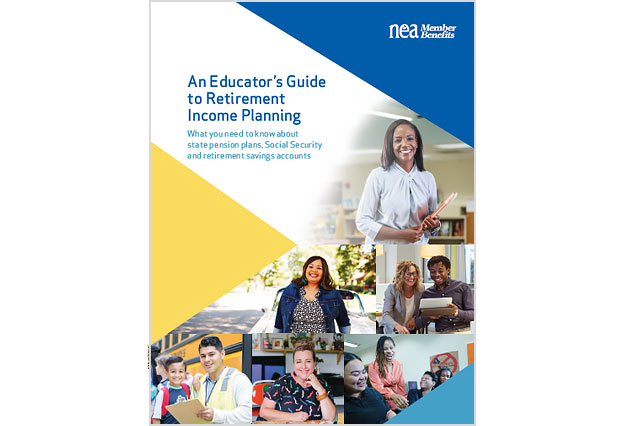
An Educator’s Guide to Retirement Income Planning was created specifically for NEA members to explain the key components of teacher retirement income and how those sources may work together.
Download the guide to explore the retirement income sources educators often rely on and key considerations that may affect long-term financial planning.
NEA members can access this guide at no cost.
Why Retirement Planning for Teachers Looks Different
Educators often face retirement circumstances that differ from those in the private sector. Pension systems differ by state, eligibility for Social Security may depend on where you work and moving between districts or states can influence your future benefits.
For example, some public-school employees are not eligible for Social Security benefits through their teaching positions. In those situations, retirement income may rely more heavily on pension benefits and personal savings.
Recognizing these differences can help educators better estimate how much retirement income they may need and where that income may come from.
Understanding the 3 Sources of Teacher Retirement Income
Most educators rely on three primary sources of income in retirement:
State Pension Plans
For many educators, a pension provides the foundation of teacher retirement income. These plans are typically defined benefit plans that provide a monthly payment for life once eligibility requirements are met.
Benefits are usually based on factors such as years of service, salary history and retirement age. Because pension rules vary by state and district, understanding how your specific plan works can help you plan more effectively.
Social Security
Social Security provides monthly income for millions of retirees. However, not all public-school employees participate in Social Security through their education careers.
Currently, about 60% of public-school employees are eligible for Social Security benefits in addition to a pension. Eligibility depends on whether Social Security taxes are paid through an educator’s employment.
Personal Savings and Investments
Personal savings can play an important role in supplementing pension income and Social Security benefits. Workplace retirement plans such as 403(b) and 457(b) plans allow educators to save through payroll deductions, while individual retirement accounts may provide additional options.
Over time, these savings can help strengthen an overall retirement income strategy and provide greater flexibility.
Building a Retirement Income Strategy
Each of these sources — pensions, Social Security and personal savings — contributes to an educator’s overall retirement income strategy.
Seeing how they work together can help you evaluate your retirement readiness. For example, pension eligibility, Social Security timing and savings decisions can all influence your long-term financial outlook.
The goal is to create a clear picture of how these income sources may support your financial needs throughout retirement.
What You’ll Find in the Guide
An Educator’s Guide to Retirement Income Planning explains how the major retirement income sources for educators work together and highlights key considerations unique to public-school employees.
Inside the guide, NEA members will find information about:
- How state pension plans are funded and how benefits are calculated.
- How Social Security works and which educators may be eligible.
- The differences between defined benefit and defined contribution plans.
- Personal savings and investment options that may supplement pension income.
- A retirement planning checklist to help you evaluate your current situation.
- Additional resources to support your retirement planning journey.
Some members may think of it as a practical teacher retirement survival guide, offering insights tailored specifically to the retirement realities educators face.
Ready to explore the guide for yourself?